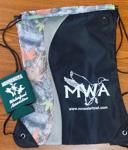
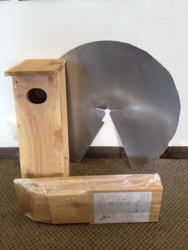
The Minnesota Waterfowl Association is proud to introduce the 2010 Inaugural Class to the Minnesota Waterfowl Hall of Fame. We are excited to honor these 11 men for the years of dedicated service to the conservation cause. Each member offered a unique gift and perspective to conservation and it is with great honor we introduce them to you!
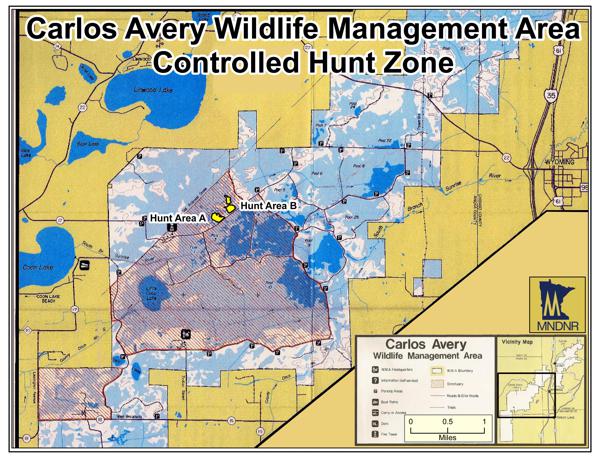
Arthur S. Hawkins
He completed undergraduate studies at Cornell University in 1934 and obtained his Master of Science degree at the University of Wisconsin in 1937, where he was one of the early students of Aldo Leopold. After college, Art began work with the Illinois Natural History Survey, where he was introduced to emerging waterfowl and wetland problems of that era by Frank Bellrose, who became a life-long professional colleague and personal friend. Together, they conducted initial studies on the development of artificial nesting structures for wood ducks and laid the groundwork for waterfowl population surveys and determination of annual hunter kill of ducks along the Mississippi River. Upon returning in 1945 from four years in the U. S. Army during World War II, Art continued his waterfowl work with the Illinois Natural History Survey. In 1946 Art took a job with the U. S. Fish and Wildlife Service (USFWS) as one of the first flyway biologists, where he became one of the pioneers who helped develop the concept for formation of the Flyway Council System. Beginning in 1948, he was instrumental in organizing the Mississippi Flyway Waterfowl Committee that subsequently led to the formation of the Mississippi Flyway Council in January 1952, followed by the Technical Section in January 1953. He became the Service's Mississippi Flyway Representative in 1953. He spent the next 10 years working seasonally on waterfowl production studies and wetland relationships in Manitoba, Canada. There, in cooperation with the Canadian Wildlife Service, Manitoba Wildlife Branch and the Delta Waterfowl Research Station, he worked with another Leopold student, H. Albert Hochbaum, then Director of the Delta Station. He retired in 1974. He was a leader in attempts to improve harvest management of Canada goose populations in the Mississippi Flyway. He was a strong advocate of good sportsmanship and believed that hunters were a dimension of game management too often forgotten in professional circles. He continued to work as a re-employed annuitant for USFWS until the mid-1980s. In retirement he continued to be active in a variety of environmental and resource management issues in Minnesota and Wisconsin, and played a strong role in formation of the Wood Duck Society in 1985. The walls of his office and home were adorned with significant awards recognizing his many accomplishments. Over a period of 65 years, he influenced the lives of many people working in the field of natural resources research and management. He was an inspiration and role model for young and old alike, and an important mentor to all who sought his advice and wisdom. He certainly earned his recognition as one of the pioneers in waterfowl management in North America and was a legend within the migratory bird fraternity. He was active in these circles until his death in 2006 at the age 92.
Arthur S. Hawkins (Art) was a pioneer and international leader in waterfowl research and management. Born in Batavia, New York, Art loved hunting, fishing and trapping as a boy, outdoor passions that led him to seek a career in natural resources management.
Bob Head
Bob grew up in South Dakota and moved to LaCrosse, Wisconsin at a young age. In his later years of school, his family moved to Albert Lea, MN. He worked for a lumber company for over 40 years. Bob has two daughters and a loving supportive wife, Beverly. Bob loved to hunt pheasants and ducks. Bob always looked forward to the hunting season and was always thinking about hunting. He lived in Kansas when his company sent him there, and he was introduced to quail hunting. He loved it. Bob always had German Shorthair dogs and later had Golden Retrievers. He designed a floating carp barrier for MWA on several lakes to keep the carp out. He was meticulous in his attention to detail, and that lent itself towards starting the MWA and setting the direction of habitat management for shallow lakes. Bob also wrote many letters to legislators to express his concern for what he saw happening. Bob remained involved in waterfowl circles until his death in August of 2004.
Head was one of the founders of the Minnesota Waterfowl Association. He, along with Dick Lindell, Ray Hangge and Tom Tubbs, got together in the mid 1960s to talk about ducks, and because they were all busy people, they were not going to just get together and talk, they were looking for solutions to the problems. These four individuals all worked very hard for a living, and worked even harder at their passion for helping the ducks.
James Ford Bell
James Ford Bell was an inveterate outdoorsman, an early conservationist, a lifelong scientist and a leading philanthropist. Bell was born in Philadelphia, PA in 1879, and at the age of 9 moved with his family to Minneapolis. He received a Bachelor of Science degree from the University of Minnesota in 1901. Bell was a leading figure in the American flour milling industry and founder of General Mills, Inc. He was on the Board of Regents for the University of Minnesota from 1939 until his death in 1961. Mr. Bell was a driving force in the building and development of the Museum of Natural History at the University of Minnesota, renamed in his honor in 1966. The James Ford Bell Museum of Natural History is dedicated to the gathering of information about the natural world and passing it on to others in an inspiring way. Another manifestation of Mr. Bell's interest in natural history and conservation was his work at Delta Manitoba beginning in 1931 with authority from the Canadian government to raise and release wild ducklings to more than offset annual hunting harvests. In 1938, after consultation with Aldo Leopold of the University of Wisconsin and the renowned Dr. William R. Rowan of the University of Alberta, James Ford Bell established the American Wildlife Foundation, now the Delta Waterfowl Foundation. Delta's mission is to expand upon the knowledge of the needs of waterfowl and wetlands. 
Don Helmeke
His love of tinkering and waterfowl intersected many times in his life. He is best known for perfecting a design for wood duck nesting boxes that made the structures longer lasting and easier to attach to trees. He later invented his own camouflage, Dukoflage, which used dark and light waterfowl figures. He acquired the patent for a duck call named the Dual Call that could make 24 different sounds. With the duck call, his camouflage pattern, and designs for a new duck-decoy bag, he launched the Duckman line of waterfowl products in 1980. In the late 1980s, Helmeke advocated that duck hunters voluntarily reduce their bag limits and shoot only drake ducks to protect waterfowl populations. The effort, known as the Voluntary Restraint Program, became a national project. He also founded Operation Canvasback with the Minnesota Waterfowl Association, which produced signs and publicity to protect canvasback ducks during closed seasons. Helmeke helped organize Woodie Camp in 1988 and served as the first director of this outdoor camp for children which is still operated by MWA. In 2005, he was among a group of hunters who organized the Rally for Ducks, Clean Water and Wetlands at the state Capitol. The rally drew 5,000 hunters and outdoor enthusiasts. A second Duck Rally was held the following year. Helmeke was also part of a group of outdoorsmen known as the Orange Hats that lobbied lawmakers to pass the Clean Water, Land and Legacy Amendment. Don passed away in 2009.
Helmeke was born in Minneapolis and grew up near Victoria. His father was a hunter who introduced young Don to the joys of chasing ducks and pheasants.
Dick Lindell
Dick Lindell
Dick got started in his love of waterfowling back in the 1940s. His dad and uncle helped him get the bug. Back in those days they had just gone through the big drought, Ducks Unlimited was just getting started and there was hope!
Dick's dad gave him his first shotgun, an Ithaca pump, as well as a dozen Mason mallard decoys. In the late 40s, Dick traded the pump for a Browning auto 5; in the mid 50s he ruined the Mason decoys. He ruined the decoys by going to Herters and buying real mallard wings. He then proceeded to saw grooves in the sides of the decoys to wire on the wings. He thought he was going to have real decoys! He said he never smelled anything so bad. Most of Dick's duck hunting in the 40s, 50s and 60s was in Freeborn county at Bear Lake, Freeborn Lake or Lake Geneva. Dick Hunted Manitoba and Saskatchewan in the 70s, 80s and 90s. Dick said that by 1964 the hunting wasn't so good, and he had a slipped disc in his back so he couldn't hunt that fall. Dick started talking to a lot of old timer hunters and found that some of them took it upon themselves to adjust the water level on Bear Lake by removing the planks at the outlet. That seemed to freeze out the rough fish and stimulate aquatic plant growth. So that prompted Dick to write to Bob Jesson with the DNR to see if something could be done to help clean up these lakes. Dick mentioned what Ray Hangge said all those years ago, we've lost almost all of our wetlands and all we have left are the shallow lakes of which there are about 2,000. In February of 1965, the then called Conservation Department of MN came down for a meeting. They had a good meeting, but they felt like nothing was happening. The group called for another meeting in February of 1966, and Dick mentioned that the farmers really showed up. The farmers said ain't doing nothing on my lake. Dick was frustrated and gave up at that time. Then Ray Hangge called a meeting at his house in February of 1967, and that is how the MWA was formed. It actually was originally called the Southern Minnesota Waterfowl Lake Improvement Association. They figured if the Conservation Department (now the DNR) would flush the toilet on 20 lakes a year and keep managing them from then on, it would take 100 years to clean up the mess ditching and tiling had done. Their thought was that by all the draining that was going on had an impact on the natural sponges that they provide for drinking water, clean water, shallow lakes for waterfowl, plus all of the wetlands. So they started trying to bring them back. They passed the Lake Designation Law. They got the State Duck Stamp Bill passed to pay for the management of the Game Lakes, and still found problems on going. Dick Lindell is a retired postal worker living in Albert Lea. In Dick's home there are over 200 mounted birds, a wonderful testimate to his love of waterfowl.
Jimmy Robinson
Renowned as a hunter, fisherman and conservationist, his writing career spanned 45 years. He wrote fourteen books on shooting and hunting. He was one of the world's most famous hunting writers and sportsmen. He was editor for Sports Afield magazine, and the hunting partner of some of the biggest names in entertainment, politics, and business. Jimmy founded his first lodge at Delta Marsh in 1935 in a farmhouse near Portage Creek. Its more luxurious successor, dubbed the Sports Afield Lodge in honor of Jimmy's long-time employer, was built in 1958 on the east side of the marsh, south of St. Ambroise. Jimmy Robinson passed away in June of 1986, leaving a legacy of sportsmanship that is still widely admired today.
Jimmy Robinson was born Aug. 27, 1896 in Minnesota, moving to Manitoba as a youth. At the age of 75, he was reporting his 50th Grand American Tournament as the dean of the world's trapshooting writers. His fantastic memory, his indefatigable work and irrepressible personality have promoted trapshooting for 50 years and endeared him to the world and to trap shooters.
Paul Englund
Paul Englund is the consummate waterfowler, whose resume includes hunter, guide, call maker, historian, mentor and activist. Possibly most well known for his line of hand-made world class duck and goose calls, Paul's Calls and in particular his Pit-Boss goose calls are sought by both hunters and collectors alike. Paul's calls have won over 35 state and regional duck and goose calling competitions, and his calls have garnered him first place at the prestigious Callmakers & Collectors Association of America's contest in St. Charles, Illinois. Paul cut his teeth duck hunting at the historic Grey Hound duck camp on famed Lake Christina where his father guided and cooked. Later in life, Paul too would guide. Paul's skills and understanding of waterfowl and their habits led him to mentor and inspire countless numbers of aspiring hunters, particularly youngsters, in the arts of decoying and calling to the birds he so admired. Paul has also shared freely of his knowledge and inspired and mentored others to take up the art of callmaking. His dedication to the science and sport led him to help preserve the history of callmakers when he served as president and vice-president to the fledgling Callmakers & Collectors Association of America (CCAA) where he penned several articles documenting some of the most influential callmakers in Minnesota. Paul continues to be a draw at the Minnesota Decoy Collectors Association's annual show where he is the ambassador of calls, callmaking and its rich history. Paul is also an active member in the Minnesota Waterfowl Association (MWA), Minnesota Duck & Goose Callers, Fur Fin & Feathers Club, Delta Waterfowl, Ducks Unlimited (DU), Trout Unlimited (TU) and the National Rifle Association (NRA) where he has donated countless numbers of his calls and raising many thousands of bucks-for-ducks. Dr. Quack, as he is known to his friends, is truly a waterfowler's waterfowler. 
Harvey K. Nelson
He served in the US Navy in the South Pacific during World War II, 1943-1945. He returned to the University of Minnesota where he received a BS degree in Zoology and Fish and Wildlife Management in 1950. He received an MS degree in Natural Resources Conservation from Michigan State University in 1957. In 1992, he was awarded a Doctor of Science degree by North Dakota State University. He also participated in two Senior Management Training Programs under the Department of the Interior in Washington, DC, with scholarships in public administration at George Washington University, and is a graduate of the Federal Executive Institute at Charlottesville, VA. He joined the US Fish and Wildlife Service at the Sand Lake National Wildlife Refuge, SD in 1950. Initially assigned to work on early wetland studies and waterfowl surveys, he later worked on several national wildlife refuges in South Dakota, North Dakota, Minnesota, and Michigan. In 1957, he transferred to the Regional Office in Minneapolis where he served as Assistant Regional Refuge Supervisor. Following an assignment with the Division of Wildlife Research in Washington, DC in 1963, he was appointed Director of the Northern Prairie Wildlife Research Center then being established at Jamestown, North Dakota. He held that position until 1974, when he transferred to Washington, DC, to serve as Associate Director of the Fish and Wildlife Service. As Associate Director for Fish and Wildlife Resources, he supervised the operation of some of the Service's major programs, including the national wildlife refuge system, national fish hatcheries, wildlife law enforcement, migratory bird management and animal damage control. In 1980, he was appointed Regional Director for the North Central Region, with offices in the Twin Cities, Minnesota. He was responsible for administering agency programs in Minnesota, Iowa, Missouri, Wisconsin, Illinois, Michigan, Indiana, and Ohio. In December 1987, he was appointed to the newly established position of Executive Director for the North American Waterfowl Management Plan, starting in Minnesota and. then in Washington, DC. He was responsible for coordinating the organization and implementation of the Plan in the United States, Canada and Mexico during the first five years of the program. He retired from that position in February 1992, with 42 years of service. Harvey held appointments as adjunct professor of zoology at the University of North Dakota and North Dakota State University. He has been an active member of The Wildlife Society and is a Certified Wildlife Biologist. He is an Elected Member of the American Ornithologists Union, and has held various offices in several professional, fraternal and civic organizations. He is the author or co‑author of more than 90 technical publications in his field. Following retirement, Harvey established a private consulting business and continued to work with natural resource agencies, organizations and private corporations. For three years he conducted research and evaluation of bird mortality for the wind power industry. He also serves as a Special Consultant to the Minnesota Waterfowl Association. He continues to serve on the board of directors for The Trumpeter Swan Society (President 1999-2003), Wood Duck Society, Minnesota Outdoor Heritage Alliance, and the Deep Portage Conservation Foundation, an Environmental Learning Center near Hackensack, Minnesota. He chaired the Predation Avian Recruitment Task Force established by the International Association of Fish and Wildlife Agencies under the Berryman Institute at Utah State University during 1995-2001. He received the Department of the Interior's Meritorious Service Award in 1980 for his leadership of Service programs. In 1986, he received the Department's Distinguished Service Award, the highest honor bestowed on employees by the Secretary of Interior. In 1987, he received the President's Award as a Meritorious Senior Executive. He was presented the Professional Award of Merit by the North Central Section of The Wildlife Society in 1987. In 1992 he received the Minnesota Award from the Minnesota Chapter of The Wildlife Society for outstanding contributions to the wildlife management profession. In 1992, he also received an Award of Appreciation from the Canadian Wildlife Service for his dedication to international cooperation. He was presented the Silver Beaver Award by the Boy Scouts of America for his work with the Red River Valley Council, and in 1991 received the William T. Hornaday Gold Medal Award for contributions to scouting and national conservation programs. In 1994, he was presented the International Canvasback Award by the North American Waterfowl Management Plan Committee for his leadership in development and implementation of that international program. During September 1996, a 600 acre wetland/grassland tract near his home town of Evansville, Minnesota was dedicated in his honor for his lifelong work with waterfowl and wetlands. He was the second recipient of the Lifetime Achievement Award presented by the Minnesota Waterfowl Association in 1997. He was named Man of the Year for 2000 by Minnesota Outdoor News.
Harvey was born January 29, 1925, in Barrett, Minnesota. He developed an early interest in wildlife while hunting and trapping in the vicinity of his home town, and became indoctrinated in hunting canvasbacks on the famous Lake Christina nearby. This stimulated his interest in waterfowl and wetlands.
Les Kouba
Leslie C. Kouba, dean of Minnesota's wildlife artists, is a self-made man who described himself as 52 percent businessman and 48 percent artist. I've made my way in this world by following three principles: First, pick the thing you like to do best; then, learn everything you can about it; and finally, be willing to work harder than anyone else in that field. Kouba's secret to success: work. It's that simple." My father, continues Kouba, contributed to my early appreciation of nature. He taught me a lot of the little tricks in hunting, trapping, and later, fishing. He instilled in me, at an early age, the sheer enjoyment of being outdoors. Back when I was a kid, it was really something to go hunting. Those were the days when the ducks and geese were so plentiful that the sky turned black when the flocks passed by overhead. These experiences were so exciting to me that I started to portray these happenings on bits of paper that I always carried with me. Consequently, I drew my impressions of birds, game animals, big game and fish-everything across the board. Because I actually hunted, I developed an early understanding of all the background skills necessary to be successful at my future career as a wildlife artist. Kouba decided early in life that farming wasn't for him. I knew I could draw when I was about 8 years old. I think I made up my mind about then that I wanted to be an artist when I grew up. In fact, says Kouba, many of the buildings on the farm still show traces of my early enthusiastic attempts at painting. And I was quite convinced I was on the right track when I sold my first painting at age 11 to a prosperous German farmer who lived near Hutchinson. That first painting was of a deer at the water's edge with some pine trees in the background, remembers Kouba. It was something that I had created completely myself. I had hardly any materials-just junk-whatever I was able to pick up on the farm. I used a two-foot wide piece of upson board for my canvas. At that time, upson board was used for attic insulation. I did it in oil paints, and 'oil' in those days meant anything that wasn't watercolor. I used just about any kind of pigment I could lay my hands on-house paint, implement paint, and enamels-you name it. I sold that painting for eight dollars, a king's ransom in those days" says Kouba. It doesn't seem like much by today's standards, but keep in mind that was in 1928, 'when a dime was as big as a wagon wheel.' To put it into perspective, my father's total income from his dairy business was $22 for the month. That early sale went a long way in convincing Kouba's parents that his artistic skills were worth developing. Kouba's parents supported Les's interest in art by enrolling him at age 14 in a correspondence course sponsored by the Federal Schools in Minneapolis. The name has been changed since I went there, says Kouba. It's now known as Art Instruction, the 'Draw-Me' school. It offers all the basics but it doesn't overly influence technique. You don't end up painting like your instructor. I really learned a lot from that school. I will always be thankful that I had the opportunity to take the course. Many artists I've found today, says Kouba, could benefit from some of those early lessons. Less passed away in 1998. This information was taken from Kouba's book, The Legacy of Les C. Kouba, p 11-12. 
Ray Hangee
Ray, a founder of the MWA, is a very passionate individual that not only had ideas on how to bring ducks back but actually went out and got his hands dirty and did the work when no one would listen. Ray, considered one of the founders of the MWA, is the type of person that was not going to just sit by and watch the habitat conditions deteriorate. Ray is a man of action. Ray spearheaded the Save the Game Lakes initiative for MWA. Ray figured that there wasn't a lot of habitat left that hadn't been ruined, so he focused on the shallow lakes of Minnesota. There are over 2,000 shallow lakes in Minnesota, and Ray wanted them managed and wanted the ability to lower those lakes to take care of the rough fish and regenerate the growth of aquatic life. Ray and the rest set forward a plan to start the Lake Designation Law that would give the authority to designate these shallow lakes to the DNR. To help pay for this, the MWA put forth an idea of starting a state duck stamp. Finally, in 1977 Minnesota passed into law the requirement that every waterfowl hunter had to purchase a duck stamp. The monies raised would help fund the management of the Game Lakes Program. Ray has always said that no matter the crisis, the ducks need you. This is true today as it was back in the mid 60s. Ray is a believer that preserving the shallow wetlands and lakes will return the duck numbers to where they used to be. Clean water is the key. People need to realize that one of the main functions of clean water is healthy wetlands. These wetlands act as natural filters to clean water. 
Tom Tubbs
Tom is one of the four individuals that we consider the founders of the Minnesota Waterfowl Association. Tom worked tirelessly on wetland issues facing Minnesota, starting in the 60s. He had a vision along with the other founders that said that Minnesota needed to focus on shallow lakes in Minnesota. So they made it a point of heading in that direction. They called this the Save the Game Lakes program. They also pushed for the first state duck stamp in Minnesota to provide funding for the Game Lake program. Tom was a President of MWA and served on the Board in other capacities. Tom was elected to two terms on the Freeborn County Soil and Water Conservation District. He has won many awards for his efforts in conservation over the years, such as the Dr. Robert G. Green award by the MPLS Jaycees for outstanding conservation efforts, as well as the Conservationist of the Year award by the MWA. He was also named one of the Golden 50 by the MN DNR. He created the Tom Tubbs Wood Nesting Box. All the proceeds from the sale of these houses went to MWA. Tom made national radio and TV ads for Phillips Petroleum to promote the wood duck houses. The Tom Tubbs Wood Duck House is even in the Smithsonian Museum. His concern for road side ditches and their nesting habitat for birds were instrumental in getting him appointed to a task force by the Governor. As a result of that, the State changed how it manages roadsides for habitat. He also received the WCCO Good Neighbor Award twice for various city and county projects with school children and natural resources. Tom is a member of most conservation organizations. He also has served on various committees at his church, schools and other civic organizations.